
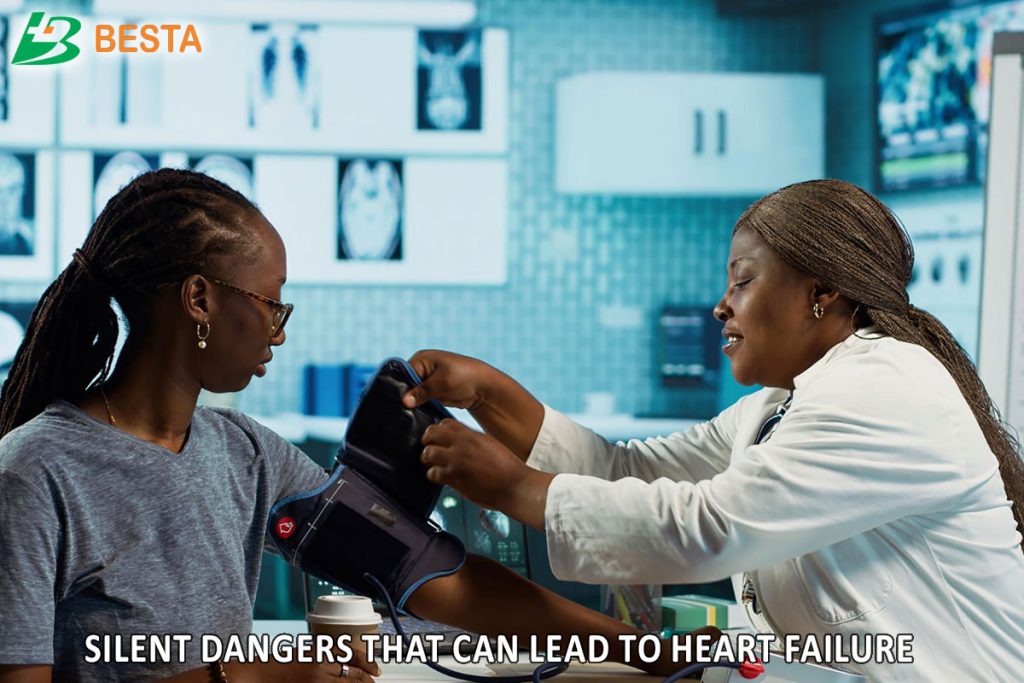
Hypertension Risks: 6 Silent Dangers That Can Lead to Heart Failure
Introduction: The Silent Killer You Might Be Ignoring
Have you ever felt “fine” and assumed everything inside your body must be fine too? That’s exactly how hypertension risks creep into millions of lives—quietly, slowly, and without warning. High blood pressure doesn’t shout. It whispers. And by the time you notice something is wrong, your heart may already be struggling to survive.
Hypertension is often called the silent killer because most people don’t feel symptoms until severe damage has occurred. Yet behind the scenes, your blood vessels, heart, kidneys, and brain are under constant attack.
At Besta Super Specialized Polyclinic (www.besta.co.tz), we see the long-term effects of untreated hypertension every day. With advanced diagnostic services like MRI, CT-Scan, Ultrasound, Digital X-ray, laboratory testing, and cardiac assessments, Besta plays a life-saving role in detecting and managing hypertension-related complications early.
In this article, you’ll discover the six silent dangers of hypertension that can eventually lead to heart failure—and how you can stop them before it’s too late.
Understanding Hypertension and Why It’s So Dangerous
Hypertension is a condition where the force of blood against your artery walls is consistently too high. Think of your blood vessels as water pipes. When pressure is too strong, the pipes weaken, crack, and eventually fail.
The scariest part? You can live with dangerously high blood pressure for years without a single symptom. Meanwhile, your organs are being slowly damaged.
Common Causes of High Blood Pressure
Poor diet (too much salt and fat)
Lack of physical activity
Obesity
Chronic stress
Smoking and alcohol
Family history
Why Early Diagnosis Matters
At Besta Super Specialized Polyclinic, early detection is possible through digital blood pressure screening, laboratory tests, ECG, CT scans, MRI, and ultrasound imaging. These technologies help doctors catch silent organ damage before it becomes fatal.
The Connection Between Hypertension and Heart Failure
Heart failure doesn’t happen overnight. It’s the final chapter of years of stress placed on the heart by uncontrolled blood pressure.
When your heart works harder to pump blood, its muscle thickens and stiffens. Over time, it becomes too weak to pump effectively. This leads to fluid buildup, shortness of breath, fatigue, and eventually, life-threatening complications.
Let’s explore the six silent dangers of hypertension risks that push the heart toward failure.
1. Thickened Heart Muscle (Left Ventricular Hypertrophy)
When blood pressure stays high, your heart must push harder. It’s like lifting heavier weights every day without rest. Eventually, the heart muscle thickens.
Why This Is Dangerous
A thickened heart becomes stiff. It can’t fill or pump properly, leading to heart failure.
How Besta Helps
Besta’s ECG, MRI, and echocardiography imaging can detect early heart muscle changes before symptoms appear.
2. Narrowed and Damaged Blood Vessels
High blood pressure injures the inner lining of arteries. This damage allows cholesterol to stick and form plaque.
What Happens Next?
Blood flow becomes restricted
Organs receive less oxygen
The risk of heart attack increases
Diagnostic Support at Besta
Using CT-Scan, MRI, and Doppler ultrasound, Besta specialists can visualize blocked or narrowed vessels early.
3. Increased Risk of Heart Attack
Hypertension accelerates plaque buildup in the arteries. When a plaque ruptures, it can block blood flow completely.
The Silent Danger
Many heart attacks occur without warning. Some feel like mild indigestion—until it’s too late.
Besta’s Life-Saving Tools
With Digital X-ray, CT scans, ECG, and laboratory cardiac markers, Besta provides fast diagnosis for chest pain and heart emergencies.
4. Kidney Damage That Worsens Heart Failure
Your kidneys filter waste from blood. High pressure damages the tiny blood vessels inside them.
Why This Affects the Heart
When kidneys fail, fluid builds up in the body, forcing the heart to work harder. This speeds up heart failure.
Besta’s Diagnostic Advantage
Besta offers laboratory tests, ultrasound, and CT imaging to monitor kidney health and detect damage early.
5. Irregular Heart Rhythm (Arrhythmia)
Damaged heart tissue and oxygen deprivation can cause abnormal heart rhythms.
Why It’s Dangerous
Arrhythmias can lead to blood clots, stroke, or sudden cardiac arrest.
How Besta Detects It
With ECG monitoring, imaging scans, and laboratory tests, Besta ensures early rhythm detection and intervention.
6. Fluid Buildup and Organ Congestion
When the heart weakens, blood backs up in the lungs, liver, and legs.
The Hidden Signs
Swollen feet and ankles
Shortness of breath
Fatigue
How Besta Supports You
Using chest X-rays, ultrasound, and CT scans, Besta identifies fluid accumulation and organ stress before irreversible damage occurs.
How Besta Super Specialized Polyclinic Protects Your Heart
Besta is more than a cancer center—it’s a comprehensive medical facility offering:
MRI, CT-Scan, Ultrasound, Digital X-ray
Laboratory diagnostics
General clinics and internal medicine
Cardiac and organ monitoring
Cancer treatment (radiotherapy and chemotherapy)
Preventive screenings and palliative care
Early diagnosis saves lives. At Besta, technology meets compassionate care.
Prevention Tips to Reduce Hypertension Risks
Reduce salt intake
Exercise at least 30 minutes daily
Maintain a healthy weight
Stop smoking
Limit alcohol
Manage stress
Get regular checkups
Conclusion
Hypertension risks are real, silent, and deadly. But they are also preventable. Your heart is not a machine—it needs care, attention, and early screening.
At Besta Super Specialized Polyclinic, advanced diagnostic tools and expert care help detect danger before it becomes fatal. Don’t wait for symptoms. Protect your heart today.
FAQs
1. Can hypertension cause heart failure?
Yes. Long-term high blood pressure weakens the heart and leads to failure.
2. Is hypertension reversible?
With lifestyle changes and medication, blood pressure can be controlled.
3. How often should I check my blood pressure?
At least once every six months—or more if you’re at risk.
4. What tests does Besta use for heart health?
MRI, CT-Scan, ECG, ultrasound, laboratory tests, and Digital X-ray.
5. Where is Besta Polyclinic located?
Visit www.besta.co.tz for location and appointment details.
Leave a reply
Most Commented