
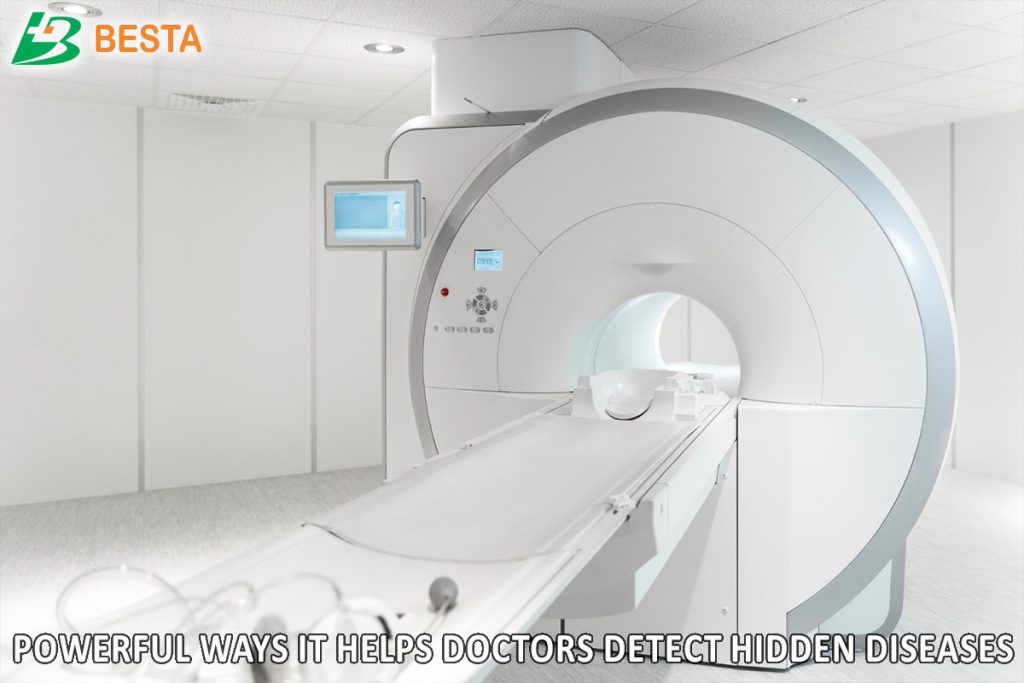
MRI Scan: 7 Powerful Ways It Helps Doctors Detect Hidden Diseases
MRI Scan: 7 Powerful Ways It Helps Doctors Detect Hidden Diseases
When it comes to modern medicine, seeing inside the human body without surgery almost feels like magic. But that’s exactly what an MRI Scan does. It gives doctors a clear, detailed picture of what’s happening beneath your skin, helping them detect diseases that would otherwise remain hidden.
Think of an MRI scan as a super-powered camera for your body. It doesn’t just take photos—it creates detailed maps of your organs, tissues, and even blood flow. This makes it one of the most reliable tools for early diagnosis, especially for complex conditions like cancer, neurological disorders, and internal injuries.
At Besta Super Specialized Polyclinic in Dar es Salaam, MRI scanning plays a critical role in early disease detection and treatment planning. Combined with services like radiotherapy, chemotherapy, CT scans, and ultrasound, Besta offers a complete diagnostic ecosystem under one roof.
So, how exactly does an MRI scan help doctors? Let’s explore the seven most powerful ways it uncovers hidden diseases and saves lives.
What Is an MRI Scan and How Does It Work?
An MRI Scan (Magnetic Resonance Imaging) uses strong magnetic fields and radio waves to create highly detailed images of the inside of your body. Unlike X-rays or CT scans, MRI does not use radiation, making it safer for repeated use.
When you lie inside the MRI machine, your body responds to the magnetic field. The machine then captures signals from your tissues and converts them into digital images. These images are so precise that doctors can see even tiny abnormalities.
In simple terms, an MRI scan is like switching on a bright light in a dark room. Suddenly, everything becomes visible, including problems you didn’t even know existed.
Why MRI Scans Are So Important in Modern Healthcare
In today’s world, early diagnosis is everything. The sooner a disease is detected, the easier it is to treat. That’s where MRI scans shine.
They help doctors:
Detect diseases before symptoms become severe
Monitor ongoing conditions
Plan surgeries and treatments accurately
Track how well treatments like chemotherapy or radiotherapy are working
At Besta Dar es Salaam, MRI scans are often used alongside CT scans, digital X-rays, and laboratory tests to ensure no detail is missed.
1. MRI Scans Detect Cancer at Early Stages
One of the most powerful uses of an MRI Scan is early cancer detection. MRI can identify tumors in soft tissues long before they become visible on other imaging methods.
This is especially important for cancers of the:
Brain
Breast
Spine
Liver
Prostate
MRI images help doctors see the exact size, shape, and location of tumors. This allows oncologists at Besta to design targeted treatment plans using radiotherapy or chemotherapy.
Early detection often means less aggressive treatment and a much higher survival rate.
2. MRI Reveals Brain and Nervous System Disorders
The brain is one of the most complex organs in the body, and MRI is its best friend.
MRI scans are essential for diagnosing:
Stroke
Brain tumors
Multiple sclerosis
Epilepsy
Memory disorders
Unlike CT scans, MRI can clearly show soft brain tissue and nerve pathways. This helps neurologists detect problems that could affect memory, movement, and speech.
At Besta, MRI scans support neurological assessments and guide specialists in creating effective treatment strategies.
3. MRI Scans Identify Hidden Spinal Problems
Back pain is common, but the cause is often hidden deep inside the spine. That’s where MRI scans come in.
MRI helps detect:
Slipped or herniated discs
Spinal tumors
Nerve compression
Infections
Degenerative disc disease
These conditions are often invisible on regular X-rays. With MRI, doctors can see exactly which nerves or discs are affected and recommend the right treatment.
For patients in Dar es Salaam, Besta’s MRI services provide fast and accurate spinal diagnosis without invasive procedures.
4. MRI Helps Diagnose Heart and Blood Vessel Diseases
Your heart works non-stop, and MRI helps ensure it stays healthy.
Cardiac MRI scans can detect:
Heart muscle damage
Blocked blood vessels
Congenital heart defects
Poor blood flow
MRI can even show how blood moves through the heart in real time. This allows doctors to catch cardiovascular problems before they lead to heart attacks or heart failure.
When combined with other diagnostic services at Besta, MRI becomes a powerful tool for preventing life-threatening heart conditions.
5. MRI Scans Detect Joint and Muscle Injuries
Sports injuries and chronic pain often hide deep inside muscles and joints. MRI scans reveal what the eye cannot see.
MRI helps diagnose:
Torn ligaments
Muscle injuries
Joint inflammation
Bone infections
Cartilage damage
This is especially helpful for athletes, workers with physical jobs, and elderly patients. MRI ensures accurate diagnosis and prevents unnecessary surgeries.
At Besta Super Specialized Polyclinic, MRI imaging supports orthopedic care and rehabilitation planning.
6. MRI Scans Monitor Disease Progression
Diagnosis is only the first step. MRI also helps doctors monitor how diseases evolve over time.
Doctors use MRI to:
Track tumor growth or shrinkage
Monitor multiple sclerosis progression
Evaluate treatment response
Detect disease recurrence
For cancer patients undergoing chemotherapy or radiotherapy at Besta, MRI provides clear evidence of whether treatment is working.
It’s like having a progress report for your health.
7. MRI Scans Guide Surgical and Treatment Planning
Before any major surgery, doctors need a precise roadmap. MRI provides exactly that.
MRI scans help surgeons:
Locate tumors accurately
Avoid critical nerves and blood vessels
Plan minimally invasive procedures
This reduces surgical risks and improves recovery time. It also ensures treatments like radiotherapy target only the affected area.
At Besta Dar es Salaam, MRI imaging plays a key role in multidisciplinary treatment planning.
What to Expect During an MRI Scan
Many people feel nervous about MRI scans, but the process is simple and painless.
Here’s what usually happens:
You lie on a table that slides into the MRI machine
The scan takes 20 to 45 minutes
You’ll hear some loud noises, but you won’t feel pain
You must stay still for clear images
Some MRI scans use contrast dye to improve image clarity. This is safe and commonly used at Besta for cancer and neurological imaging.
Is MRI Safe?
Yes, MRI scans are considered extremely safe. They do not use radiation, unlike CT scans or X-rays.
However, MRI is not suitable for people with:
Certain metal implants
Pacemakers
Some surgical clips
At Besta, all patients undergo safety screening before the scan to ensure maximum protection.
MRI vs CT Scan vs Ultrasound
Each imaging method has its strengths:
MRI:
Best for soft tissues
No radiation
Highly detailed images
CT Scan:
Faster
Good for bones and trauma
Uses low-dose radiation
Ultrasound:
Real-time imaging
Ideal for pregnancy and abdominal organs
No radiation
At Besta Super Specialized Polyclinic, doctors choose the right tool based on your condition. Often, MRI is used alongside CT and ultrasound for complete diagnosis.
Why Choose Besta for MRI Scans in Dar es Salaam?
Besta is not just another clinic. It is the first specialized cancer center in Dar es Salaam, offering world-class diagnostic and treatment services.
Besta provides:
Experienced radiologists
On-site oncologists
Integrated care with chemotherapy and radiotherapy
Modern imaging facilities
This means faster diagnosis, better treatment planning, and improved patient outcomes.
The Emotional Power of Early Detection
Let’s be honest—nobody likes hospital visits. But what’s scarier: a scan or a late diagnosis?
An MRI scan gives you peace of mind. It replaces fear with knowledge. It transforms uncertainty into clarity.
It’s like turning on the lights before walking into a dark room. Suddenly, you can see where you’re going.
Conclusion: MRI Scans Are Silent Lifesavers
An MRI Scan is one of the most powerful diagnostic tools in modern medicine. It helps detect cancer, brain disorders, spinal problems, heart diseases, and hidden injuries—often before symptoms appear.
At Besta Super Specialized Polyclinic in Dar es Salaam, MRI scanning is part of a complete healthcare system that includes CT scans, ultrasound, digital X-rays, chemotherapy, and radiotherapy.
If you value early detection, accurate diagnosis, and expert care, MRI is not just an option—it’s a necessity.
FAQs About MRI Scans
1. Is an MRI scan painful?
No, MRI scans are completely painless. You may hear loud sounds, but you won’t feel any discomfort.
2. How long does an MRI scan take?
Most MRI scans take between 20 and 45 minutes, depending on the body part being examined.
3. Can MRI detect cancer?
Yes, MRI is one of the most reliable tools for detecting tumors, especially in soft tissues like the brain and breast.
4. Is MRI safe for repeated use?
Yes, MRI does not use radiation, so it is safe even for multiple scans.
5. Where can I get an MRI scan in Dar es Salaam?
You can get high-quality MRI services at Besta Super Specialized Polyclinic, the leading cancer and diagnostic center in Dar es Salaam.
Leave a reply
Leave a reply