
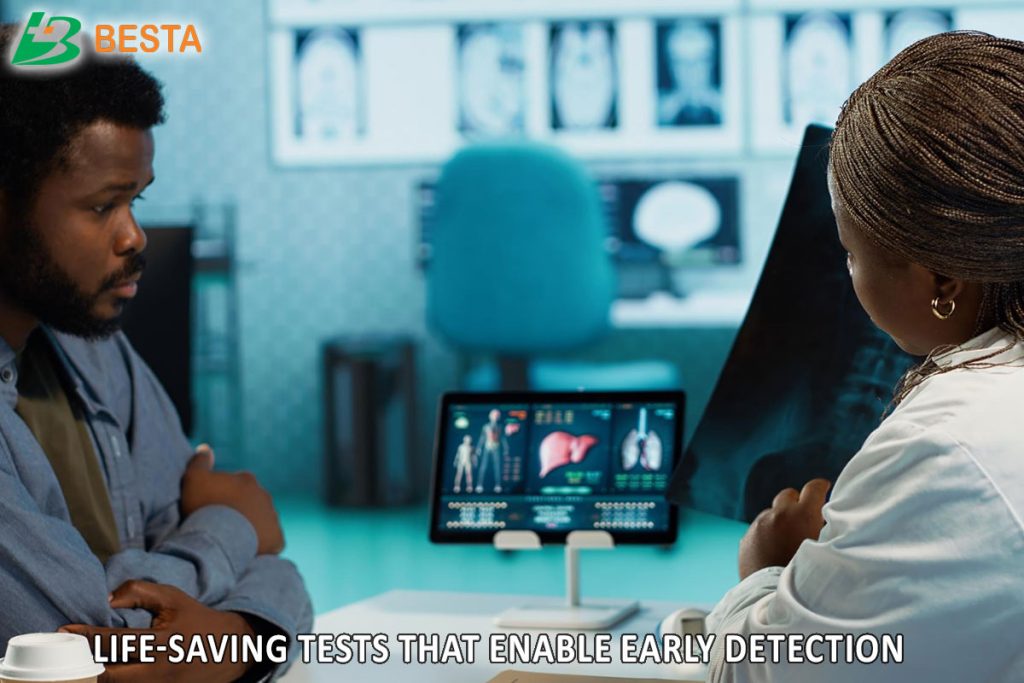
Cancer Screening: 8 Life-Saving Tests That Enable Early Detection
Introduction: Why Cancer Screening Is One of the Most Powerful Health Decisions You Can Make
Imagine finding a small leak in your roof before it destroys your entire house. That’s what cancer screening does for your body. It catches problems early—before they become life-threatening, painful, or expensive to treat.
Most cancers don’t show symptoms in their early stages. By the time you feel something is wrong, the disease may already be advanced. That’s why early detection is not just helpful—it’s life-saving.
Every year, millions of people lose their lives because cancer was discovered too late. But here’s the hopeful truth: when cancer is detected early, survival rates increase dramatically. Screening turns fear into foresight. It gives you control instead of uncertainty.
At Besta Super Specialized Polyclinic (www.besta.co.tz) the first specialized cancer center in the region—patients receive world-class diagnostic and treatment services, including MRI, CT-Scan, Digital X-ray, Ultrasound, laboratory testing, radiotherapy, and chemotherapy. These tools help doctors identify cancer early and start treatment when it’s most effective.
In this guide, you’ll discover eight life-saving cancer screening tests that can protect you and your loved ones. These tests are practical, accessible, and proven to save lives.
Let’s dive in.
What Is Cancer Screening?
Cancer screening refers to medical tests performed on people who do not yet show symptoms, to detect cancer at its earliest stages. The goal is simple: find cancer before it spreads.
Screening is not about fear—it’s about empowerment. It gives you the chance to act early, when treatment is easier, cheaper, and more successful.
Why Early Detection Matters
When cancer is caught early:
Treatment is more effective
Survival rates are significantly higher
Medical costs are lower
Recovery is faster
Quality of life improves
Early detection turns a life-threatening diagnosis into a manageable condition.
Who Should Consider Cancer Screening?
You should consider regular cancer screening if you:
Are over 30 years old
Have a family history of cancer
Smoke or drink alcohol
Have a sedentary lifestyle
Are frequently stressed
Have unexplained symptoms
Have been exposed to toxins
Even if you feel healthy, screening is still important. Cancer often grows silently.
Cancer Screening Test #1: Mammogram (Breast Cancer Screening)
Why This Test Saves Lives
Breast cancer is one of the most common cancers in women worldwide. A mammogram can detect tumors years before you can feel them.
Early-stage breast cancer has a survival rate of over 90%. That’s the power of early detection.
When to Screen
Women aged 40 and above should have a mammogram every 1–2 years. Women with a family history should start earlier.
At Besta Polyclinic, advanced imaging ensures accurate and safe breast cancer detection.
Cancer Screening Test #2: Pap Smear (Cervical Cancer Screening)
Why It’s Essential
Cervical cancer is highly preventable when detected early. A Pap smear identifies abnormal cells before they turn into cancer.
This simple test has saved millions of women worldwide.
Who Needs It
Women aged 21 to 65 should have regular Pap tests.
Early screening means early treatment—and a full recovery.
Cancer Screening Test #3: Colonoscopy (Colorectal Cancer Screening)
The Silent Killer
Colorectal cancer often grows without symptoms. A colonoscopy can detect and remove precancerous polyps before they become dangerous.
When to Start
Adults should begin screening at age 45 or earlier if there is a family history.
This test doesn’t just detect cancer—it prevents it.
Cancer Screening Test #4: Low-Dose CT Scan (Lung Cancer Screening)
For Smokers and High-Risk Individuals
Lung cancer is often diagnosed late. A low-dose CT scan can find small tumors early.
Who Should Screen
Long-term smokers
Former smokers
People exposed to pollutants
Early lung cancer detection saves lives.
At Besta, CT-Scan services provide accurate lung screening.
Cancer Screening Test #5: Prostate-Specific Antigen (PSA Test)
For Men’s Health
The PSA test checks for prostate cancer. Elevated levels can signal early disease.
When to Test
Men over 50—or 45 with risk factors—should test regularly.
Early treatment leads to excellent outcomes.
Cancer Screening Test #6: Ultrasound (Abdominal and Organ Screening)
A Versatile Tool
Ultrasound helps detect cancers in the liver, kidneys, ovaries, and uterus.
It is painless, fast, and safe.
Besta offers high-resolution ultrasound for accurate diagnosis.
Cancer Screening Test #7: Digital X-ray
Seeing Inside the Body
A Digital X-ray detects bone, chest, and soft tissue abnormalities. It helps identify tumors and lung changes early.
It’s fast and reliable.
Cancer Screening Test #8: MRI and CT-Scan
Advanced Imaging for Precision
MRI and CT-Scan provide detailed images that reveal tumors deep inside the body.
These tests help doctors:
Locate cancer
Determine its size
Guide treatment
Besta’s advanced imaging technology ensures accurate results.
What Happens If Cancer Is Found?
Early detection allows doctors to start treatment immediately.
At Besta Super Specialized Polyclinic, patients receive:
Radiotherapy
Chemotherapy
Specialized oncology care
Palliative support
Besta provides compassionate, comprehensive cancer care under one roof.
Emotional Benefits of Cancer Screening
Screening reduces fear, builds confidence, and gives peace of mind. Knowing your health status helps you live fully.
Uncertainty is stressful. Knowledge is empowering.
How Often Should You Get Screened?
Your doctor will recommend based on age, risk, and history. Annual or bi-annual screenings are common.
Consistency saves lives.
Conclusion: Early Detection Is Your Greatest Weapon
Cancer screening is not about waiting for symptoms. It’s about staying ahead. These eight life-saving tests give you power, clarity, and hope.
Don’t wait for tomorrow. Your health deserves action today.
Visit www.besta.co.tz and schedule your screening.
Frequently Asked Questions
1. Is cancer screening painful?
Most tests are quick and minimally uncomfortable.
2. Can I screen even if I feel fine?
Yes. Cancer often has no early symptoms.
3. Does Besta offer full cancer diagnosis?
Yes. Besta provides imaging, lab tests, and treatment.
4. How long do results take?
Most results are available within a short time.
5. Is early cancer treatable?
Yes. Early-stage cancer has much higher survival rates.
Most Commented