
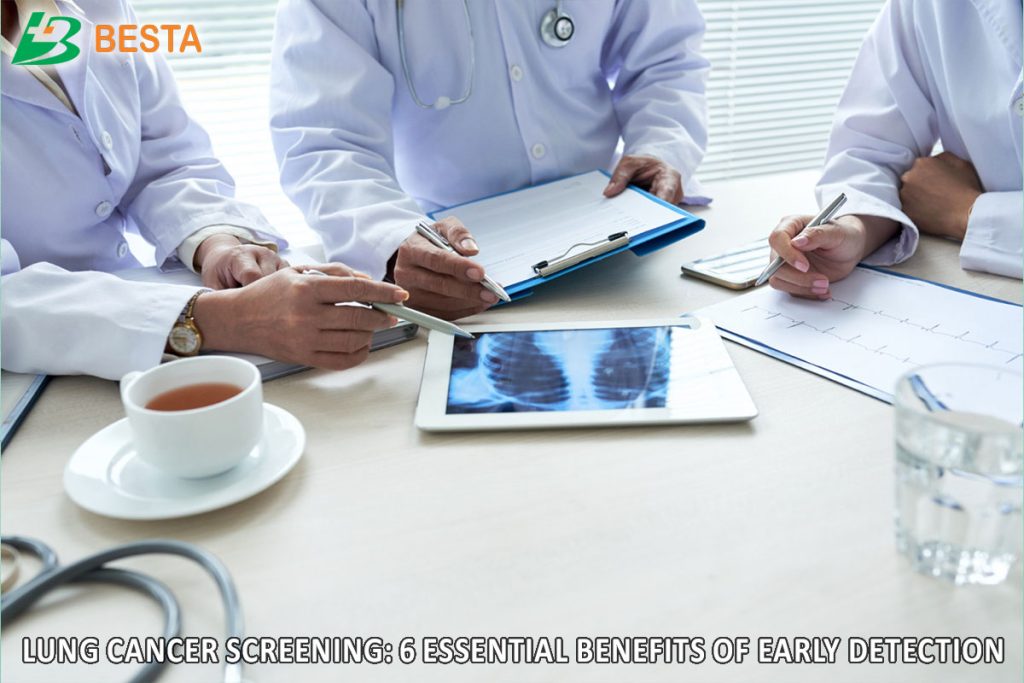
Lung Cancer Screening: 6 Essential Benefits of Early Detection
Imagine if you could spot a health problem years before it ever made you feel sick. That’s not wishful thinking—it’s exactly what lung cancer screening makes possible. Lung cancer is one of the world’s most common cancers, yet it’s also one of the quietest. It rarely announces itself early. By the time symptoms like a persistent cough or chest pain appear, the disease has often already advanced.
Here’s the good news: you don’t have to wait for symptoms. Modern screening technology can detect lung cancer at its earliest, most treatable stage—often when the tumor is smaller than a coin. And if you live in Tanzania, this life-saving service is closer than you might think. At Besta Super Specialized Polyclinic, the first specialized cancer center in Dar es Salaam, advanced diagnostic imaging and expert cancer care are available right in your city.
In this article, we’ll walk you through what lung cancer screening involves, who should consider it, and the six essential benefits of catching lung cancer early. By the end, you’ll know exactly why screening matters—and how to take the first step.
What Is Lung Cancer Screening?
Think of lung cancer screening as a routine check-up for your lungs. It’s a simple, painless test that looks for signs of cancer in people who feel perfectly healthy. The gold standard today is the low-dose CT scan (LDCT)—a quick imaging test that takes detailed pictures of your lungs in just a few minutes.
Why a CT scan and not a regular chest X-ray? A CT scan captures cross-sectional images of your lungs from multiple angles, allowing doctors to spot tiny nodules that an ordinary X-ray might miss. According to the American Cancer Society, screening with LDCT has been shown to lower the risk of dying from lung cancer in people at high risk.
At Besta Polyclinic in Dar es Salaam, our diagnostic services include modern CT scan, MRI, ultrasound, and digital X-ray technology—everything needed for accurate, reliable lung cancer screening under one roof.
Who Should Get Screened?
Not everyone needs annual lung screening, but you should seriously consider it if you fall into a higher-risk group. Screening is generally recommended for:
- Adults aged 50 to 80 with a significant smoking history
- Current smokers or those who quit within the last 15 years
- People with long-term exposure to secondhand smoke, industrial dust, or air pollution
- Anyone with a family history of lung cancer
Not sure if you qualify? That’s what we’re here for. Our specialists at Besta can assess your personal risk factors and recommend the right screening plan for you.
The 6 Essential Benefits of Early Detection
So why does catching lung cancer early matter so much? Let’s break down the six most important benefits—each one a powerful reason to take screening seriously.
1. Dramatically Higher Survival Rates
This is the big one. When lung cancer is found at an early, localized stage, the five-year survival rate can exceed 60%. When it’s found late, after it has spread, that number drops below 10%. That’s not a small difference—it’s the difference between a treatable condition and a life-threatening emergency.
Think of it like a small fire in your kitchen. Catch it while it’s a flicker, and a glass of water puts it out. Wait until it spreads, and you’re fighting to save the whole house. Lung cancer screening helps you catch the flicker.
2. More Treatment Options, Less Aggressive Care
Early-stage lung cancer opens the door to a much wider range of treatment choices. A small, contained tumor may be removed with surgery alone, or treated effectively with targeted radiotherapy. Late-stage cancer, on the other hand, usually demands longer, more intensive treatment.
At Besta Super Specialized Polyclinic, patients benefit from comprehensive cancer care in Dar es Salaam, including radiotherapy and chemotherapy delivered by experienced oncology specialists. When cancer is caught early, treatment is often shorter, gentler, and far easier on your body and your daily life.
3. Peace of Mind for You and Your Family
Have you ever noticed how uncertainty can weigh heavier than bad news? Many people at risk of lung cancer carry a quiet, nagging worry—especially former smokers. A clear screening result lifts that weight off your shoulders.
And if the scan does find something? You’ll know early, when your options are best. Either way, you replace fear with facts. That peace of mind extends to your loved ones too, because your health is never just about you.
4. Lower Treatment Costs Over Time
Let’s talk about money, because it matters. Treating advanced cancer is expensive—prolonged hospital stays, multiple treatment cycles, and supportive care all add up quickly. Early detection flips that equation.
A screening scan costs a small fraction of what late-stage treatment does. By investing in lung cancer screening now, you’re protecting not only your health but also your family’s financial future. It’s one of the smartest health investments you can make.
5. Detection of Other Hidden Health Conditions
Here’s a benefit many people don’t expect: a lung CT scan doesn’t just look for cancer. Because it captures detailed images of your chest, it can also reveal other conditions—such as emphysema, tuberculosis scarring, heart calcifications, or infections—that deserve medical attention.
In other words, one quick scan gives your doctors a valuable window into your overall chest health. At Besta’s diagnostic center in Dar es Salaam, any additional findings are reviewed by specialists who can guide you on the next steps immediately.
6. A Powerful Motivator for Healthier Living
There’s something about seeing your own lungs on a screen that makes health advice feel real. Research shows that many smokers who undergo lung screening are more motivated to quit afterward. The screening process becomes a turning point—a moment where you take charge of your health story.
Whether your results are clear or require follow-up, screening naturally connects you with healthcare professionals who can support you with smoking cessation advice, lifestyle guidance, and ongoing monitoring.
What to Expect During Lung Cancer Screening at Besta
Feeling nervous about your first screening? Don’t be. The process is quicker and easier than most dental appointments. Here’s how it works at Besta Super Specialized Polyclinic:
Step 1: Consultation and Risk Assessment
Your journey starts with a conversation. A specialist reviews your medical history, smoking history, and any symptoms or concerns. This ensures screening is right for you and that we tailor the process to your needs.
Step 2: The Low-Dose CT Scan
Next comes the scan itself. You lie comfortably on a table while the CT machine takes images of your chest. No needles, no injections, no pain. The entire scan usually takes less than ten minutes, and you can return to your normal activities immediately.
Step 3: Expert Review and Follow-Up
Our radiologists and oncology specialists carefully review your images. If everything looks clear, you’ll simply return for your next routine screening. If anything needs a closer look, Besta offers the full spectrum of follow-up care in one location—additional imaging with MRI, ultrasound, or digital X-ray, diagnostic evaluation, and treatment services including chemotherapy and radiotherapy.
That’s the real advantage of choosing the first specialized cancer center in Dar es Salaam: you’re never sent from one facility to another. Everything happens under one roof, with one team that knows your case.
Why Early Detection Matters in Tanzania
Across Africa, lung cancer is often diagnosed at a late stage—largely because screening services have historically been hard to access. According to the World Health Organization, lung cancer remains a leading cause of cancer death worldwide, yet early detection significantly improves outcomes.
That’s exactly why Besta Super Specialized Polyclinic was established in Dar es Salaam: to bring world-class cancer diagnosis and treatment closer to Tanzanians. You no longer need to travel abroad for advanced imaging or specialized oncology care. From lung cancer screening to comprehensive treatment, expert help is available right here at home.
Simple Tips to Protect Your Lung Health
Screening is powerful, but it works best alongside healthy habits. Here are a few ways to keep your lungs strong:
- Quit smoking—it’s the single most effective step you can take, and it’s never too late to benefit
- Avoid secondhand smoke and use protective equipment if you work around dust or chemicals
- Stay physically active to keep your lungs and heart strong
- Pay attention to warning signs like a persistent cough, breathlessness, chest pain, or unexplained weight loss—and see a doctor promptly
Remember: screening is for people without symptoms. If you already have symptoms, don’t wait for a screening appointment—seek a diagnostic evaluation right away.
Conclusion
Lung cancer doesn’t have to be a silent threat. With modern lung cancer screening, you can find problems early, treat them effectively, and get on with living your life. The six benefits are clear: higher survival rates, gentler treatment options, peace of mind, lower costs, detection of other conditions, and motivation for healthier living.
If you’re over 50 with a history of smoking—or you simply want expert guidance on your lung health—don’t put it off. Visit Besta Super Specialized Polyclinic, the first specialized cancer center in Dar es Salaam, Tanzania. With advanced CT scan, MRI, ultrasound, and digital X-ray facilities, plus complete radiotherapy and chemotherapy services, Besta gives you everything you need for early detection and expert care in one trusted location.
Your lungs work for you every second of every day. Isn’t it time you did something for them? Book your lung cancer screening at Besta today.
Frequently Asked Questions (FAQs)
1. How often should I get lung cancer screening?
If you’re in a high-risk group—typically adults aged 50–80 with a significant smoking history—annual screening with a low-dose CT scan is generally recommended. Your doctor at Besta Polyclinic in Dar es Salaam can create a personalized screening schedule based on your risk profile.
2. Is lung cancer screening painful or dangerous?
Not at all. The low-dose CT scan is completely painless and non-invasive—you simply lie still for a few minutes while images are taken. The scan uses a much lower radiation dose than a standard CT, and for high-risk individuals, the life-saving benefits far outweigh the minimal radiation exposure.
3. I quit smoking years ago. Do I still need screening?
Possibly, yes. Lung cancer risk remains elevated for years after quitting. If you quit within the last 15 years and have a substantial smoking history, screening is still recommended. Congratulations on quitting—now take the next step and confirm your lungs are healthy.
4. What happens if my screening finds something abnormal?
First, don’t panic—most nodules found during screening are not cancer. If something needs a closer look, Besta offers complete follow-up care in Dar es Salaam, including advanced imaging (MRI, ultrasound, digital X-ray), specialist consultation, and, if needed, treatment services such as chemotherapy and radiotherapy—all in one facility.
5. How do I book a lung cancer screening at Besta Polyclinic?
It’s easy. Visit www.besta.co.tz or contact Besta Super Specialized Polyclinic directly to schedule a consultation. Our team in Dar es Salaam will assess your risk, answer your questions, and guide you through every step of the screening process.
Leave a reply
Leave a reply