
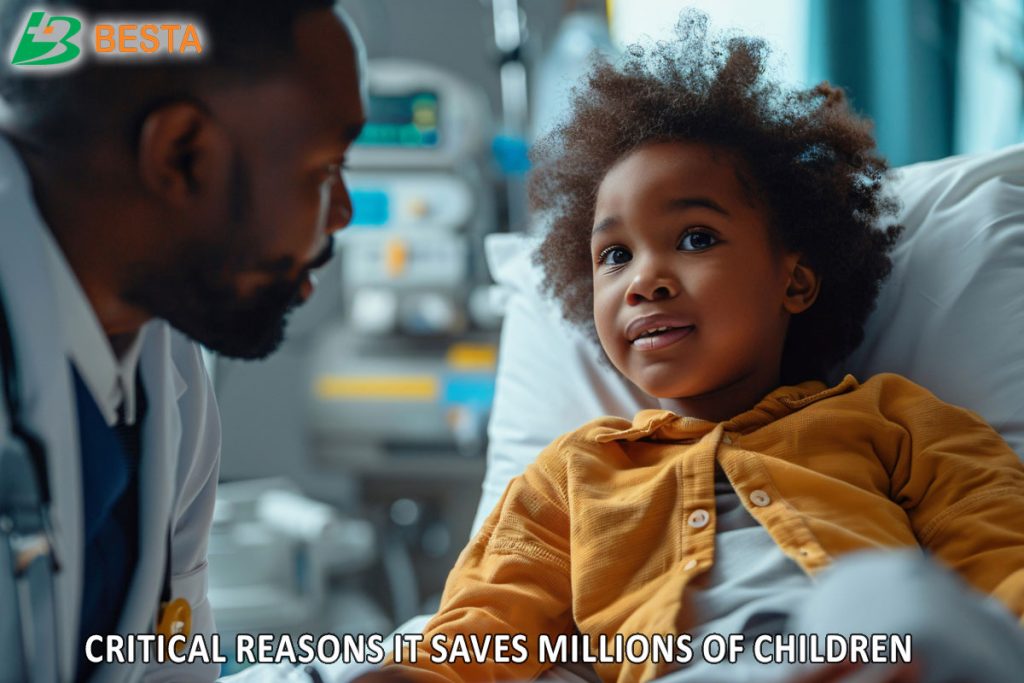
Vaccination: 9 Critical Reasons It Saves Millions of Children
When a child receives a vaccine, something remarkable happens inside their tiny body. It’s like a training session for the immune system—a rehearsal for a battle that may come one day.
That single injection prepares the body to recognize and fight dangerous diseases before they cause harm. And the results speak for themselves. Vaccination has saved millions of children around the world and continues to be one of the greatest achievements in modern medicine.
Yet many parents still underestimate its importance. Some delay vaccines, while others worry about safety without fully understanding how vaccines work.
Here’s the truth: vaccination protects not only individual children but entire communities.
In Tanzania, families can access comprehensive pediatric healthcare services and advanced diagnostics at Besta Super Specialized Polyclinic, a leading medical facility offering modern healthcare solutions including Ultrasound, MRI, CT Scan, Digital X-ray, chemotherapy, and radiotherapy.
In this in-depth guide, we’ll explore nine critical reasons vaccination saves millions of children, how it strengthens immune systems, and why preventive healthcare remains essential for a healthier future.
Let’s dive in.
What Is Vaccination?
Before exploring the benefits, it’s important to understand what vaccination actually does.
A vaccine contains a weakened or inactive form of a virus or bacteria. When introduced into the body, it triggers the immune system to produce protective antibodies.
Think of it as a practice drill for your body’s defense system.
When the real disease appears later, the immune system recognizes the threat immediately and destroys it quickly.
According to the World Health Organization, vaccination prevents between 3 and 5 million deaths globally every year.
It’s a simple intervention with life-saving power.
Now let’s explore why vaccines remain so critical for children’s health.
1. Vaccination Prevents Deadly Childhood Diseases
Before vaccines existed, many childhood diseases were terrifyingly common.
Illnesses like:
Measles
Polio
Diphtheria
Tetanus
Whooping cough
once killed millions of children worldwide.
Thanks to vaccination, many of these diseases are now rare or nearly eliminated in many countries.
For example, global vaccination campaigns have reduced polio cases by more than 99%.
Without vaccines, these diseases could easily return.
Prevention remains far safer than treatment.
2. Vaccines Strengthen the Immune System
Your child’s immune system is like a security team protecting a building.
Without training, that team might struggle to identify threats.
Vaccines provide the training manual.
They teach immune cells how to recognize dangerous viruses and bacteria, allowing the body to react quickly if exposure occurs.
This means vaccinated children develop stronger immune defenses that last for years or even a lifetime.
3. Vaccination Protects the Most Vulnerable
Not everyone can receive vaccines.
Some children have weakened immune systems due to illness or medical treatments like chemotherapy, which suppress immune responses.
Facilities such as Besta Super Specialized Polyclinic provide cancer treatments including chemotherapy and radiotherapy for patients who may have compromised immunity.
When most people are vaccinated, diseases struggle to spread.
This phenomenon is known as herd immunity, and it protects vulnerable individuals who cannot receive vaccines themselves.
In other words, vaccination becomes an act of community protection.
4. Vaccines Reduce Healthcare Costs
Treating serious infectious diseases can be extremely expensive.
Hospitalization, medications, and long recovery periods place a heavy burden on families and healthcare systems.
Vaccination prevents many of these illnesses before they occur.
That means:
Fewer hospital visits
Lower medical costs
Less time away from school or work
Preventive healthcare is always more affordable than emergency treatment.
5. Vaccination Prevents Disease Outbreaks
History has shown how quickly infectious diseases can spread.
One unvaccinated community can become the spark that ignites a large outbreak.
Vaccination acts like a firewall, preventing diseases from moving easily between individuals.
Public health experts at the Centers for Disease Control and Prevention emphasize that high vaccination rates dramatically reduce outbreak risks.
When communities maintain strong vaccination coverage, disease transmission slows or stops entirely.
6. Vaccines Protect Future Generations
Vaccination doesn’t just protect children today—it safeguards future generations.
Consider smallpox, a deadly disease that once killed millions.
Through widespread vaccination, smallpox was completely eradicated worldwide in 1980.
That means children today will never face that disease again.
Continued vaccination efforts can eliminate other diseases in the same way.
7. Vaccination Supports Healthy Childhood Development
Healthy children learn better, grow stronger, and develop socially.
When diseases strike, they disrupt schooling, physical development, and emotional wellbeing.
Serious infections can cause long-term complications such as:
Brain damage
Hearing loss
Organ damage
Growth problems
Vaccination helps children stay healthy so they can focus on what matters most—learning, playing, and growing.
8. Vaccination Works Hand-in-Hand With Early Diagnosis
Preventive care works best when combined with modern diagnostic services.
If a child develops symptoms or complications, doctors may use advanced imaging tools such as:
CT Scan
MRI
Ultrasound
Digital X-ray
These diagnostic technologies are available at Besta Super Specialized Polyclinic, helping doctors detect infections, tumors, or other medical conditions quickly.
Early diagnosis ensures children receive the right treatment as soon as possible.
Prevention and early detection form the foundation of modern pediatric healthcare.
9. Vaccination Builds Stronger Communities
Healthy children grow into healthy adults who contribute to society.
When vaccination rates remain high, communities experience:
Lower disease transmission
Reduced healthcare strain
Improved economic productivity
Vaccination protects schools, workplaces, and public spaces from outbreaks.
It’s not just a medical intervention—it’s a community investment.
By protecting children today, we build a healthier society tomorrow.
The Role of Medical Facilities in Preventive Healthcare
Vaccination programs are most effective when supported by reliable healthcare infrastructure.
Facilities like Besta Super Specialized Polyclinic play a crucial role in providing comprehensive medical services, including:
Advanced diagnostic imaging
CT Scan and MRI services
Ultrasound examinations
Digital X-ray imaging
Chemotherapy and radiotherapy treatments
Located in Dar es Salaam, the center serves patients from across Tanzania with modern healthcare technology and specialized medical expertise.
By combining preventive care with advanced diagnostics, medical facilities help families protect their children’s long-term health.
Addressing Common Vaccine Concerns
Despite overwhelming scientific evidence supporting vaccines, some parents still worry about safety.
Let’s address a few common concerns.
Are vaccines safe?
Yes. Vaccines undergo extensive testing before approval and are continuously monitored for safety.
Do vaccines cause serious side effects?
Serious side effects are extremely rare. Most children experience only mild symptoms such as soreness or low fever.
Why do children need multiple doses?
Some vaccines require booster doses to maintain long-term immunity.
Healthcare providers carefully design vaccination schedules to maximize protection.
Reliable information from organizations like the World Health Organization helps parents make informed decisions about their children’s health.
The Future of Vaccination and Pediatric Health
Medical science continues to advance rapidly.
Researchers are developing new vaccines that target diseases previously considered untreatable.
Emerging innovations include:
Cancer vaccines
mRNA vaccine technology
Personalized immunotherapy
These breakthroughs could transform healthcare in the coming decades.
Combined with modern diagnostic tools like CT Scan and MRI, vaccination will continue playing a central role in protecting global health.
Conclusion
Vaccination remains one of the most powerful tools in modern medicine.
By preventing deadly diseases, strengthening immune systems, protecting vulnerable populations, and reducing healthcare costs, vaccines save millions of lives every year.
For parents, vaccinating your child is one of the most important decisions you can make to protect their future.
Alongside preventive care, access to advanced diagnostics and specialized treatments is essential for maintaining long-term health.
Families seeking comprehensive healthcare services can visit Besta Super Specialized Polyclinic, a leading medical center offering modern diagnostic imaging, chemotherapy, radiotherapy, and specialized care.
Every vaccine administered today helps build a healthier, safer world tomorrow.
Frequently Asked Questions (FAQs)
1. Why is vaccination important for children?
Vaccination protects children from serious infectious diseases by training the immune system to recognize and fight harmful pathogens.
2. Are vaccines safe for infants?
Yes. Vaccines are carefully tested for safety and effectiveness before being approved for use in infants and children.
3. What diseases do childhood vaccines prevent?
Vaccines protect against diseases such as measles, polio, tetanus, diphtheria, hepatitis, and whooping cough.
4. Can vaccinated children still get sick?
While vaccines significantly reduce risk, no vaccine offers 100% protection. However, vaccinated individuals usually experience much milder symptoms if infection occurs.
5. Where can families in Tanzania access advanced pediatric healthcare?
Families can access diagnostic imaging and specialized medical services at Besta Super Specialized Polyclinic, a leading healthcare facility offering modern treatments and diagnostics.
Leave a reply
Most Commented